

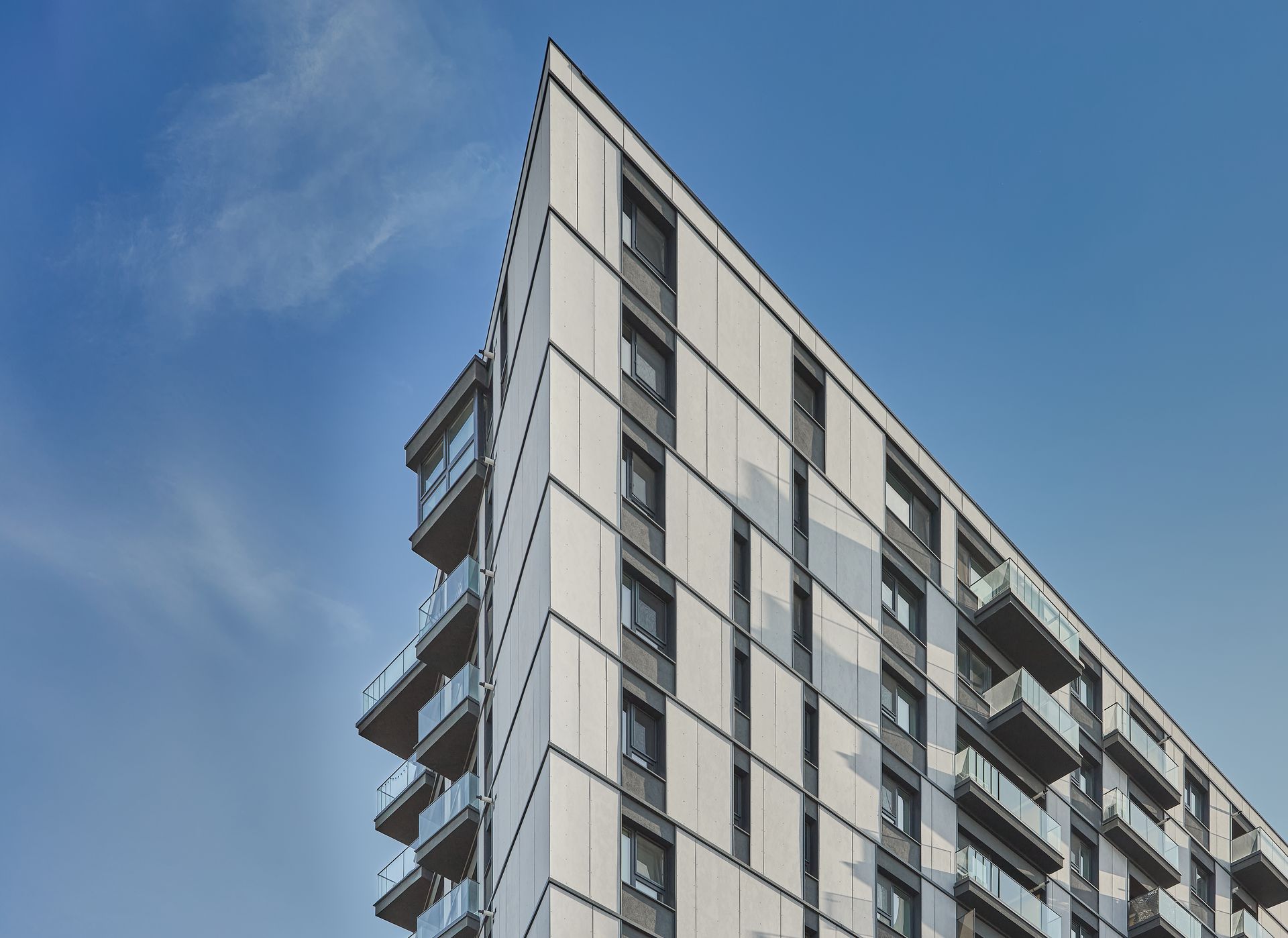
In an interview for Wall-Street.ro, Andrei Lefter, Founding Partner at DRS-Architects, talks about the state of housing in Bucharest — both in new residential developments and in the pre-1989 apartment blocks — and about what buildings say regarding the society that builds them.
Lefter emphasises that in new projects it matters enormously to understand the real profile of the buyer. He gives as an example the Lake House 2 complex at Lacul Morii, where the DRS team worked together with the developer to redefine the target audience as the area transforms. The architect's role, he says, is not to take the side of the developer or the end user alone, but to reconcile the two interests within a project that is both economically viable and livable. This is also where the difference comes from between projects that age well and those whose problems appear right after purchase.
Regarding the socialist-era blocks, the architect considers energy efficiency an absolute necessity, but warns that thermal cladding alone does not solve the urban image, nor the surrounding public space. As a result, the city remains „motley”, with disjointed interventions — a reflection, in his view, of the stage of cultural development we are at. For now, homeowners' associations turn to architects mostly for structural strengthening (one example being a block on Șoseaua Mihai Bravu, stuck in permitting and ownership issues) rather than for redesigning facades, for which demand does not yet exist.
Lefter is nevertheless optimistic: the people of Bucharest are becoming increasingly attentive to public space, and this concern is reflected even in how „capable, hands-on” mayors are elected. This trend, already visible in cities in Transylvania and Banat, but also in Craiova or Pitești, will gradually reach the capital as well, even if more slowly, given a large, fragmented city with seven district administrations.
When it comes to artificial intelligence, DRS-Architects already uses such tools for summarising legislation and technical norms, testing working options and developing internal applications. Lefter cautions, however, that AI „is not a panacea”: the technology carries out exactly what it is asked to do, without emotion and without discernment. He draws a parallel with HAL 9000 from „2001: A Space Odyssey” to illustrate the risk of incompletely formulated objectives. His conclusion: for more functional neighbourhoods and quality buildings, the objectives must be set by people, and the creativity and judgement of professionals remain essential.
Source: Wall-Street.ro, author Irina Bolboceanu